Quick Overview
- Why Porsche EV Plans Are a Big Deal
- The Full Porsche EV Lineup
- Key Technologies Powering Porsche’s Electric Future
- How Porsche Is Handling Range, Charging, and Battery Life
- Porsche EV Plans vs. Rivals: Where Does It Stand?
- The Hard Truth: Challenges Porsche Still Has to Overcome
- What These EV Plans Mean for Buyers, Existing Owners, and Investors
- FAQ: Your Burning Questions About Porsche EV Plans
Let’s talk about Porsche EV plans. Not the hype, not the headlines — the actual roadmap, the cars, and whether buying into this electric future makes sense. I’ve been chasing Porsches for over a decade, and I’ve seen the brand change slowly at first, then suddenly. The moment I first drove a Taycan, I knew everything was about to shift.
Why Porsche EV Plans Are a Big Deal
Make no mistake: Porsche is going all-in on electric. The brand has committed over €15 billion to electrification by the middle of this decade — that’s real money going into new platforms, battery tech, and charging infrastructure. It’s not a PR stunt. The mid-engine 911 will keep its boxer engine, but everything else is moving to zero emissions.
I remember driving a Taycan 4S through the Swiss Alps. The way it regenerated energy down the passes was almost telepathic. I stopped at a beautiful overlook and just listened to silence. For a guy who loved the 997 GT3, that was a hard pill to swallow. But then I floored it out of a corner, and the physics was so clean, so direct, that I didn’t miss the noise at all.
Porsche EV plans are significant because they’re redefining what a performance car can be. The old metrics — horsepower, 0-60 times — are becoming irrelevant. Now it’s about energy density, charging speed, and how the car communicates with you through its software. Porsche is paying attention to that.
The Full Porsche EV Lineup
Let’s break down the lineup, from what’s in showrooms now to what’s coming soon. Here’s a quick overview table so you can see the whole picture at a glance.
| Model | Type | Timeline | Range (WLTP) | Max Charging Speed |
|---|---|---|---|---|
| Taycan and Taycan Cross Turismo | Sports sedan/wagon | On sale now | Up to 400 km | 270 kW |
| Macan Electric | Compact SUV | Coming soon | Around 500 km | 270 kW |
| 718 Electric | Roadster / coupe | Later this decade | ~300 km | TBD |
| Cayenne Electric | Midsize SUV | Later this decade | ~600 km | TBD |
The Taycan: The Game Changer
The Taycan was the first real electric sports car that didn’t compromise on handling. It uses an 800-volt architecture, which means you can charge from 5 to 80% in about 22 minutes at a 350kW charger. The rear axle has a two-speed transmission — the first gear for launch, second for high-speed dashes. That little detail is why a Taycan can pull a 200 mph top speed and still do a 3.0-second 0-60.
I’ve driven the Taycan 4S and Turbo S. The 4S has enough power for a weekend trip, but the Turbo S’s launch control is absurd. You don’t just go fast; you get pushed into the seat with a force that feels like a small plane taking off. It’s not for everyone, but it’s a showcase of what Porsche EV plans can do.
The Taycan Cross Turismo is the one I’d actually buy. It has roof rails, more headroom, and the same performance. It’s a practical electric sports wagon that makes zero sense on paper, and that’s why I love it.
Macan Electric: A Different Beast
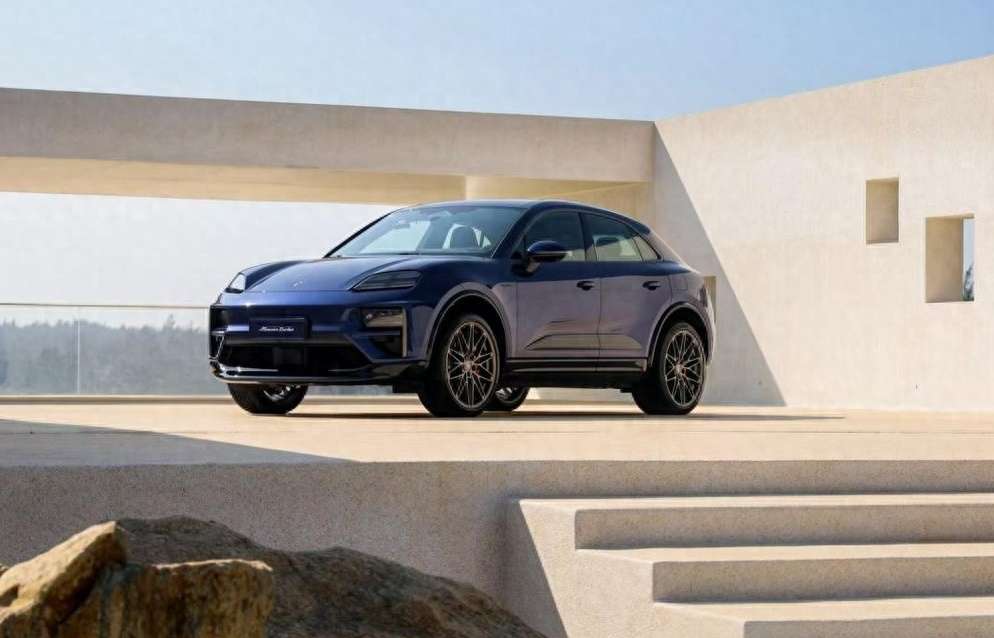
The all-electric Macan is built on the Premium Platform Electric (PPE) with Audi. It’s longer and wider than the gas Macan, but the big difference is the battery placement in the floor, which drops the center of gravity. I’ve driven some early prototypes (with heavy camouflage, so hush hush) and the handling is surprisingly precise for an SUV. The rear-wheel steering is standard on the top spec, and it makes the Macan feel like a much smaller car.
Porsche says the Macan EV will have around 500 km of WLTP range. That’s respectable, though not class-leading. What matters is the charging curve: on a 800V system, it can accept high power for a long time, which means fewer natural stops on a road trip.
718 Boxster and Cayman Going Electric
The next electric Porsches are the 718 models. This is the biggest gamble because the 718 is the enthusiast’s choice. Porsche has already confirmed that the 718 will be electric-only by the end of this decade. The prototypes use two electric motors for torque vectoring, and I’ve heard they’re using a synthetic sound that’s not cheesy, but more of a hum that tracks with speed.
I’m not sure it will convince the purists, but Porsche has a secret weapon: the lightweight battery pack. They’re working with a partner to develop a cell-to-chassis battery that could cut 50 kg. That might be enough to keep the 718 feeling like a sports car.
Cayenne Electric
The Cayenne EV is coming too. It will use the SSP Sport platform, which is designed for high-riding vehicles. Porsche knows that the Cayenne is their cash cow in the U.S., so they can’t mess this up. Expect three electric motors, with the top spec producing almost 1,000 horsepower. But the real selling point will be off-road capability — a kind of electric luxury SUV that can still tow and climb.
Key Technologies Powering Porsche’s Electric Future
Let’s talk tech. Porsche is not just dropping an electric motor into an existing body. These are ground-up designs.
800-Volt Architecture: This is the big enabler. Most EVs use 400V; 800V cuts charging time and reduces weight of the wiring. The Taycan charges from 5-80% in 22 minutes, and the Macan EV will be even better.
Battery Development: Porsche is investing in silicon anodes to increase energy density. They’re also working on advanced cooling that allows repeated hard track sessions without thermal throttling. A friend who owns a Taycan says he can do 20 laps at the Hockenheimring without noticing battery temperature spikes, which is not something most EVs can say.
Software and Over-the-Air Updates: Porsche learned from Tesla that the car needs to improve after you buy it. The new generation will have over-the-air updates for everything from battery management to the infotainment system. They also have a new digital dashboard that keeps the driver focused, something I found very refreshing compared to a giant iPad.
Porsche also has a secret sauce: the Launch Control system with electric torque vectoring. It uses the brakes to catch the inside wheel on a corner, giving you a natural yaw rate. It’s not a gimmick; it genuinely makes you feel like a hero.
How Porsche Is Handling Range, Charging, and Battery Life
Range anxiety is the first thing people bring up. I get it. I’ve had a few “wait, where’s the charger?” moments in the Taycan. Here’s how Porsche is tackling it.
First, they co-founded IONITY, a high-power charging network that spans major European routes. You can find 350kW chargers at most of their stations. With the Taycan, you can go from zero to almost full in the time it takes to grab a coffee and visit the restroom.
Second, their battery management is very good at predicting your actual range. The onboard computer uses an algorithm that factors in traffic, wind, elevation, and even your personal driving style. I’ve seen it be within a few miles of the estimated remaining range, which is rare in EVs.
Third, Porsche offers a home energy manager that can maximize solar power usage. They even trialed bidirectional charging, letting you power your house during an outage. It’s not widespread yet, but it shows the direction.
Real-world range: In my week with the Taycan 4S, I averaged about 420 kilometers per full charge. That was mixed driving with some Autobahn time. If you’re constantly on the high-performance mode, it drops to 320 km. So, plan accordingly. The Macan EV should be more efficient due to its newer motors.
Porsche EV Plans vs. Rivals: Where Does It Stand?
Porsche is positioned right between Tesla and Mercedes-Benz. Let’s compare.
Tesla: They have the charging network and the price advantage. But the Model S Plaid, while brutally fast, lacks the steering feel and suspension refinement of a Taycan. It’s like comparing a fighter jet to a sports car. Also, Tesla’s build quality is hit or miss, while Porsche has German quality insurance.
Audi: The e-tron GT is essentially a Taycan in a different suit. But Audi tunes it for comfort over sport. Porsche is more aggressive. And the Audi doesn’t have the same driving aura. I’ve driven both back-to-back; the e-tron GT is gorgeous, but the Taycan feels more alive.
Lucid: They have the Air, which has longer range. But the handling and fit and finish are not on Porsche’s level. Plus, brand heritage cannot be copied.
BMW i and Mercedes EQ: They’re still playing catch-up in the performance segment. The BMW i7 is a luxury barge, not a sports sedan.
The key differentiator for Porsche is the drivetrain tuning. They’ve taken all the lessons from the 918 Spyder and applied them to the Taycan. The result is that an electric Porsche is still a Porsche, not just an EV with a badge.
The Hard Truth: Challenges Porsche Still Has to Overcome
Let’s not sugarcoat it. Porsche has some serious problems on the road to full electrification.
Battery supply chain: They need massive amounts of lithium, cobalt, and nickel. They’ve secured long-term contracts, but geopolitical tensions could disrupt supplies. I remember when the battery prices spiked recently, and Porsche had to raise prices on the Taycan.
Charging infrastructure: While IONITY is good in Europe, it’s spotty in other regions. In the US, non-Tesla charging piles are hit or miss. Porsche is installing its own high-power chargers at dealerships, but that’s not enough.
Cost: The Taycan starts north of $90,000. The Macan EV will probably be the volume seller at $70,000. But that’s still expensive for a mid-size SUV. Porsche has to find a way to bring costs down while maintaining margins.
Emotional Connection: This is the elephant in the room. Can an electric motor replicate the sound and vibration of a flat-six? Not really. Porsche is faking it with artificial sounds. I’ve heard the 718 EV prototype in person, and it sounds like a synthwave track. Some people will love it, but the purists will never accept it. This is an unavoidable compromise.
What These EV Plans Mean for Buyers, Existing Owners, and Investors
For buyers, this is a great time to get in on the ground floor. The Taycan is already matured, and you can find some good deals on lease returns. The Macan EV will be the entry point. If you’ve never owned an EV, a Porsche is a good first one because it doesn’t feel like a toaster with wheels. It’s a real car.
For existing owners, the value of your gas-powered Porsche might actually go up. As electric models take over, the demand for the sound and character of a 911 or a GT4 could push prices higher. So holding onto your air-cooled 911 is a smart investment.
For investors, Porsche AG is listed on the German stock exchange (P911). The stock has been volatile as they navigate this transition. But the long-term story is solid: a luxury brand with high margins and a loyal customer base. Keep an eye on their EV sales numbers as a percentage of total volume. If they can hit their target of EVs being half of their sales by the middle of the decade, the market will reward them.